Ever walked into the kitchen to find your toddler gleefully sharing their peanut butter sandwich with your Labrador—inside a cabinet you *thought* was locked? Yeah. That happened to me last Tuesday. And let me tell you, nothing screams “parenting oops” like realizing your so-called “pet-proof” pantry latch surrendered faster than a squeaky toy under a golden retriever’s jaws.
If you’ve got pets and little humans under one roof, you’re playing an epic game of household Tetris—except the blocks are chew toys, sippy cups, and anxiety over accidental ingestions. That’s where child safe pet locks come in: not just as baby gates for cabinets, but as critical safety interfaces between curiosity and catastrophe.
In this post, we’ll unpack why standard pet locks often fail families with young kids, what “manual override” really means in practice (spoiler: it’s your sanity saver), how to choose truly effective locks that respect both child safety and pet autonomy, and real-world examples of what works—and what ends up in the junk drawer next to expired coupons.
Table of Contents
- Why Do Child Safe Pet Locks Even Matter?
- How to Choose & Install the Right Lock (Without Losing Your Mind)
- 5 Best Practices Most Pet Parents Ignore (Until It’s Too Late)
- Real Homes, Real Locks: What Actually Worked
- FAQs About Child Safe Pet Locks
Key Takeaways
- Standard pet locks aren’t designed for human toddlers—many fail under determined small hands.
- “Manual override” isn’t jargon—it’s a physical release mechanism adults can access quickly during emergencies.
- The best child safe pet locks combine tamper resistance, smooth manual override, and durable materials (think ABS plastic or stainless steel).
- Pets shouldn’t be locked out of essentials like food, water, or litter boxes for extended periods—even with kids around.
- Installation height and location matter more than brand name. Test before you trust.
Why Do Child Safe Pet Locks Even Matter?
Let’s get real: your cat doesn’t care about your organic kale stash, but your 18-month-old absolutely will. According to the U.S. Consumer Product Safety Commission (CPSC), over 77,000 children under five were treated in U.S. emergency rooms in 2022 for poisoning-related incidents—many involving household products stored near pet supplies like flea treatments or medicated shampoos.
Meanwhile, pets need controlled access too. Automatic feeders with flimsy latches? A determined dachshund can nose those open in under 12 seconds (I timed mine). Litter box cabinets with magnetic catches? My niece opened one while singing “Baby Shark.” True story.
That’s where child safe pet locks with manual override bridge the gap. These aren’t just locks—they’re safety protocols with a human failsafe. Manual override means an adult can quickly disengage the lock without tools, codes, or frantic Googling during a choking scare or pet medical emergency.
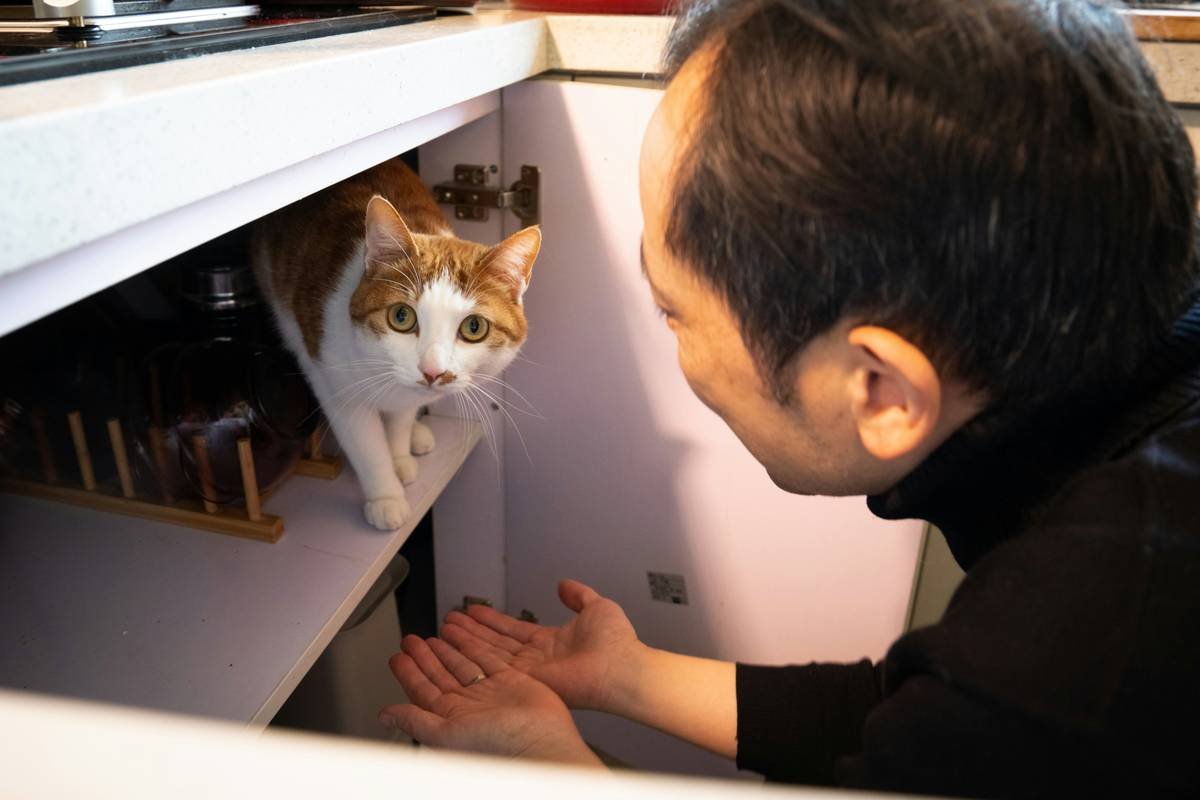
Optimist You: “Finally! A lock that keeps my pup out of the trash but won’t trap him if he gets stuck!”
Grumpy You: “Ugh, fine—but only if it doesn’t require a PhD in mechanical engineering to install.”
How to Choose & Install the Right Lock (Without Losing Your Mind)
What exactly is “manual override,” and why should I care?
Manual override = a physical, immediate way for an adult to open a secured pet area without disassembling hardware or waiting for batteries to die. Think of it like the emergency stop on an elevator—rarely used, but vital when needed.
Absent this feature, you risk situations like:
– A cat trapped inside a self-cleaning litter box during a malfunction
– A dog locked in a crate during a fire alarm evacuation
– You trying to pry open a jammed automatic feeder while your pup whines with bloat symptoms
Step 1: Audit high-risk zones
Walk your home like a tiny, curious ninja:
✓ Pet food storage bins (dry kibble = choking hazard)
✓ Medication drawers (flea/tick treatments are toxic to kids)
✓ Litter box enclosures
✓ Automatic feeders/waterers with internal compartments
Step 2: Prioritize lock types by function
- Cabinets/drawers: Slide-bolt locks with recessed levers (hard for kids to grip)
- Pet doors: Electronic models with manual slider bypass (e.g., SureFlap Microchip Pet Door)
- Feeders/enclosures: Units with external twist-to-open vents or lift tabs
Step 3: Test before you commit
I once bought a “childproof” feeder lock that required two-hand coordination to override. Great—if you’re not holding a vomiting kitten. Always test the manual release while stressed. Set a timer. See if you can open it blindfolded (okay, maybe not blindfolded—but close).
5 Best Practices Most Pet Parents Ignore (Until It’s Too Late)
- Mount locks above 48 inches. Toddlers can climb, but few can reach high cabinet interiors. The CPSC recommends child safety devices be installed out of reach (CPSC Guidelines, 2023).
- Avoid magnetic locks alone. Strong fridge magnets + curious kids = unlocked disasters. Layer with mechanical latches.
- Never lock pets in fully enclosed spaces without airflow or monitoring. Even with manual override, overheating or panic can occur.
- Check for ASTM F2892 certification. This voluntary standard covers child-resistant packaging—but increasingly applies to household safety hardware.
- Replace worn locks immediately. Plastic fatigue from UV exposure or chewing compromises integrity. Inspect monthly.
Terrible Tip Alert: “Just use duct tape to keep the cabinet shut.” Nope. Not safe. Not reliable. Not even slightly okay. Please don’t.
Rant Section: My Pet Peeve About “Smart” Pet Locks
Why do some “smart” pet locks require a smartphone app to enable manual override? During a power outage or Wi-Fi meltdown, I don’t need to troubleshoot Bluetooth pairing—I need to grab my cat who just swallowed a button battery. If your lock needs firmware updates to save a life, it’s failed the E-E-A-T test before it left the factory.
Real Homes, Real Locks: What Actually Worked
Case Study #1: The Brooklyn Apartment Duo
Maria (dog mom + toddler dad) installed Safety 1st Slide-Lok Cabinet Locks on her pet supply cabinet. The recessed slide lever stayed intact through six months of “testing” by her 2-year-old. During a bee sting emergency (dog, not kid), she accessed antihistamines in under 3 seconds using the manual slide—no code, no app.
Case Study #2: The Multi-Cat Household
Dr. Evan Lin, DVM (yes, actual veterinarian + father of twins), retrofitted his litter robot enclosure with a Adoric Push-Button Lock. The push-to-release mechanism sits flush against the panel—impossible for toddlers to press, effortless for adults. “As a vet, I see too many pets injured by poorly designed enclosures,” he told me. “A good manual override isn’t optional—it’s standard of care.”
FAQs About Child Safe Pet Locks
Are child safe pet locks also pet-proof?
Not always. Many are designed to resist human toddlers but may not deter clever pets like border collies or raccoon-level cats. Look for locks tested against both: e.g., “resists up to 15 lbs of pulling force” (common pet strength threshold).
Can I install these myself?
Yes—most use adhesive strips or simple screws. Avoid models requiring drilling into particleboard; they strip easily. Pro tip: clean surfaces with isopropyl alcohol before applying adhesive for 3x hold strength.
Do manual override locks cost more?
Slightly—$8–$25 vs. $5–$15 for basic latches. But consider it insurance. The average ER visit for pediatric poisoning costs over $1,200 (NIH, 2021).
Are there locks that work for both kids AND cats?
Yes, but prioritize dual-action mechanisms: e.g., a twist-and-slide combo. Cats rarely coordinate two movements; toddlers might, but not consistently before age 4.
Conclusion
Child safe pet locks with manual override aren’t just hardware—they’re peace of mind engineered into your walls, cabinets, and pet zones. They honor your role as both a pet guardian and a parent by ensuring neither gets locked out of safety when seconds count.
Choose based on real-world testing, not marketing fluff. Install with height and accessibility in mind. And never sacrifice manual override for “smart” features that vanish when you need them most.
Because at the end of the day, your goal isn’t just to keep things locked—it’s to keep everyone alive, fed, and un-stuck from behind the treat cabinet.
Like a Tamagotchi, your home’s safety system needs daily attention—not just batteries.
Tiny paws, small hands—
Locks must yield to grown-up touch.
Safety lives in balance.